Sleeve gastrectomy (gastric sleeve) is the most commonly performed bariatric procedure worldwide, with excellent results for the majority of patients. However, approximately 15-20% of patients experience insufficient initial weight loss or significant weight regain over time. For these patients, robotic SADI-S (Single Anastomosis Duodeno-Ileal Bypass with Sleeve Gastrectomy) offers a powerful and safe revision option that combines the precision of robotic surgery with proven metabolic outcomes.
Why Does Weight Regain Occur After Sleeve Gastrectomy?
Weight regain after sleeve gastrectomy can occur for several reasons:
- Gastric sleeve dilation: The remaining stomach pouch can gradually stretch over time, increasing food capacity
- Hormonal adaptation: Ghrelin (the hunger hormone) production may partially recover
- Metabolic adaptation: The body's metabolic rate may decrease, reducing energy expenditure
- Dietary non-compliance: Returning to high-calorie, high-volume eating patterns
- Insufficient initial restriction: If the original sleeve was not adequately narrow
- Psychological factors: Emotional eating, stress, and behavioral patterns
When weight regain exceeds 15-20% of the lost weight or BMI rises above 35 again, revision surgery should be considered.
What Is SADI-S Bypass Surgery?
SADI-S (Single Anastomosis Duodeno-Ileal Bypass with Sleeve Gastrectomy) is an advanced bariatric procedure that combines restrictive and malabsorptive mechanisms. As a revision procedure after sleeve gastrectomy, the existing sleeve is preserved while a duodenoileal bypass is added:
- The duodenum (first part of the small intestine) is divided just below the pylorus
- The distal ileum is measured 250-300 cm from the ileocecal valve
- A single anastomosis (connection) is created between the duodenum and the ileum
- This creates a common channel of 250-300 cm for nutrient absorption
The "single anastomosis" design makes SADI-S technically simpler and potentially safer than the traditional duodenal switch, while maintaining comparable weight loss and metabolic outcomes.
Robotic SADI-S Bypass: Why Robotic Surgery?
The robotic platform offers several critical advantages for SADI-S revision surgery, which is among the most technically demanding bariatric procedures:
Advantages of Robotic Surgery
- 3D visualization: Unparalleled depth perception for identifying structures in a previously operated abdomen
- Wristed instruments: 7 degrees of freedom allow precise dissection and suturing in tight spaces
- Tremor filtration: Eliminates the surgeon's natural hand tremor for sub-millimeter accuracy
- Magnification: Up to 10x magnification for identifying critical structures
- Reduced conversion rates: The robotic platform's capabilities significantly reduce the need to convert to open surgery
- Superior adhesiolysis: Precise separation of adhesions from the prior surgery
How Is Robotic SADI-S Surgery Performed? Step by Step
1. Preoperative Preparation
Comprehensive evaluation including upper GI endoscopy, abdominal CT scan, blood work, nutritional assessment, and psychological evaluation. The patient follows a 2-week liver-shrinking diet to optimize surgical conditions.
2. Abdominal Entry and Robot Docking
The surgical team establishes pneumoperitoneum and places the robotic ports. The Da Vinci system is docked to the patient, and the surgeon moves to the console.
3. Adhesion Separation
Adhesions from the previous sleeve gastrectomy are carefully separated using the robotic instruments' precise dissection capabilities. This step is critical and is significantly facilitated by the robotic platform's 3D visualization.
4. Duodenal Mobilization
The duodenum is carefully dissected and mobilized just below the pylorus. The gastroduodenal artery and surrounding structures are preserved. The duodenum is then divided using an endoscopic stapler.
5. Small Bowel Measurement
Starting from the ileocecal valve, the small bowel is measured 250-300 cm proximally to identify the site for the anastomosis. Precise measurement is essential for optimal malabsorption and nutritional outcomes.
6. Duodenoileal Anastomosis (Connection)
The single anastomosis between the divided duodenum and the ileum is created using a combination of robotic suturing and stapling techniques. This is the most technically demanding part of the procedure, where the robotic platform's precision is most valuable.
7. Leak Test and Procedure Completion
The anastomosis is tested for leaks using methylene blue dye. Drains are placed as needed, and the ports are closed.
SADI-S vs. Gastric Bypass: Which Is Better?
For revision after sleeve gastrectomy, both SADI-S and Roux-en-Y gastric bypass are viable options. Key comparisons:
| Feature | SADI-S | Roux-en-Y Gastric Bypass |
|---|---|---|
| Number of anastomoses | 1 | 2 |
| Technical complexity | Lower | Higher |
| Excess weight loss (2 years) | 70-80% | 60-70% |
| Diabetes remission | 85-95% | 80-90% |
| Internal hernia risk | Lower | Higher |
| Nutritional monitoring | More intensive | Standard |
| Dumping syndrome risk | Lower | Higher |
Who Is a Candidate for SADI-S Bypass Surgery?
Suitable Candidates
- Previous sleeve gastrectomy with insufficient weight loss (<50% excess weight loss)
- Significant weight regain (≥15-20% of lost weight)
- BMI remains ≥ 35 or ≥ 30 with unresolved comorbidities
- Poorly controlled type 2 diabetes despite previous sleeve gastrectomy
- At least 18 months since the original sleeve gastrectomy
- Commitment to lifelong nutritional supplementation and follow-up
Unsuitable Conditions
- Active substance abuse or untreated psychiatric conditions
- Inflammatory bowel disease (Crohn's disease)
- Known severe adhesive disease from multiple prior surgeries
- Unwillingness to commit to vitamin and mineral supplementation
Postoperative Course: What to Expect
First Days and Hospital Stay
Patients typically stay in hospital for 3-4 days. A clear liquid diet is started on postoperative day 1, with gradual progression to full liquids and then soft foods over 4-6 weeks.
Nutrition and Vitamin Follow-up
SADI-S involves a malabsorptive component, making lifelong vitamin and mineral supplementation essential:
- Fat-soluble vitamins (A, D, E, K): Daily supplementation with blood level monitoring
- Calcium and Vitamin D: 1500-2000 mg calcium citrate and 3000-5000 IU vitamin D daily
- Iron: Supplementation as needed, particularly in menstruating women
- B12: Monthly intramuscular injection or daily oral supplementation
- Protein: Minimum 80-100g protein daily
- Blood work: Every 3 months for the first year, then every 6 months
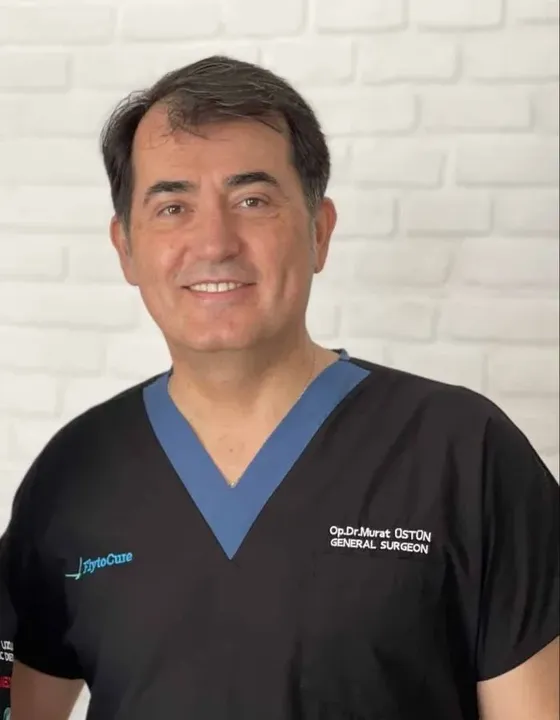
Op. Dr. Murat Üstün: Experience in SADI-S and Revision Surgery
Op. Dr. Murat Üstün brings 21+ years of surgical experience and over 8,000 successful operations to revision bariatric surgery. Certified in robotic surgery by the University of Paris, he is among the select group of surgeons in Turkey qualified to perform robotic SADI-S bypass procedures. His comprehensive approach includes thorough preoperative evaluation, meticulous surgical technique, and dedicated postoperative support.
Frequently Asked Questions About SADI-S Bypass Surgery
Is SADI-S surgery risky?
Like all surgical procedures, SADI-S carries inherent risks. However, when performed by experienced surgeons using robotic technology, the complication rates are comparable to other standard bariatric revision procedures (2-5% major complication rate).
How much weight can I expect to lose?
Patients typically lose 70-80% of their excess weight within 18-24 months after SADI-S revision surgery. Results vary based on starting weight, dietary compliance, and exercise habits.
Will my diabetes improve?
SADI-S has among the highest diabetes remission rates of all bariatric procedures, with 85-95% of patients achieving complete or significant improvement in blood sugar control.
How long should I wait after sleeve gastrectomy?
A minimum of 18 months is recommended after the original sleeve gastrectomy to allow complete healing and to establish stable post-surgical anatomy.
Will I need to take vitamins for life?
Yes. Due to the malabsorptive component of SADI-S, lifelong vitamin and mineral supplementation is mandatory. Regular blood work monitoring ensures adequate nutritional status.
Can SADI-S be performed with single port robotic surgery?
Yes. Op. Dr. Murat Üstün performs SADI-S using the Da Vinci SP single port system when appropriate, offering the benefits of single-incision surgery combined with robotic precision.
Take the First Step with a Free Initial Consultation
If you have undergone sleeve gastrectomy and are experiencing weight regain or insufficient weight loss, robotic SADI-S bypass surgery may be the right solution for you. Contact Op. Dr. Murat Üstün for a free, confidential initial consultation via WhatsApp at +90 532 413 1143.